

Ensuring the Preservation and Public Access of Photographer Dionizas Putna’s (1892–1964) Collection
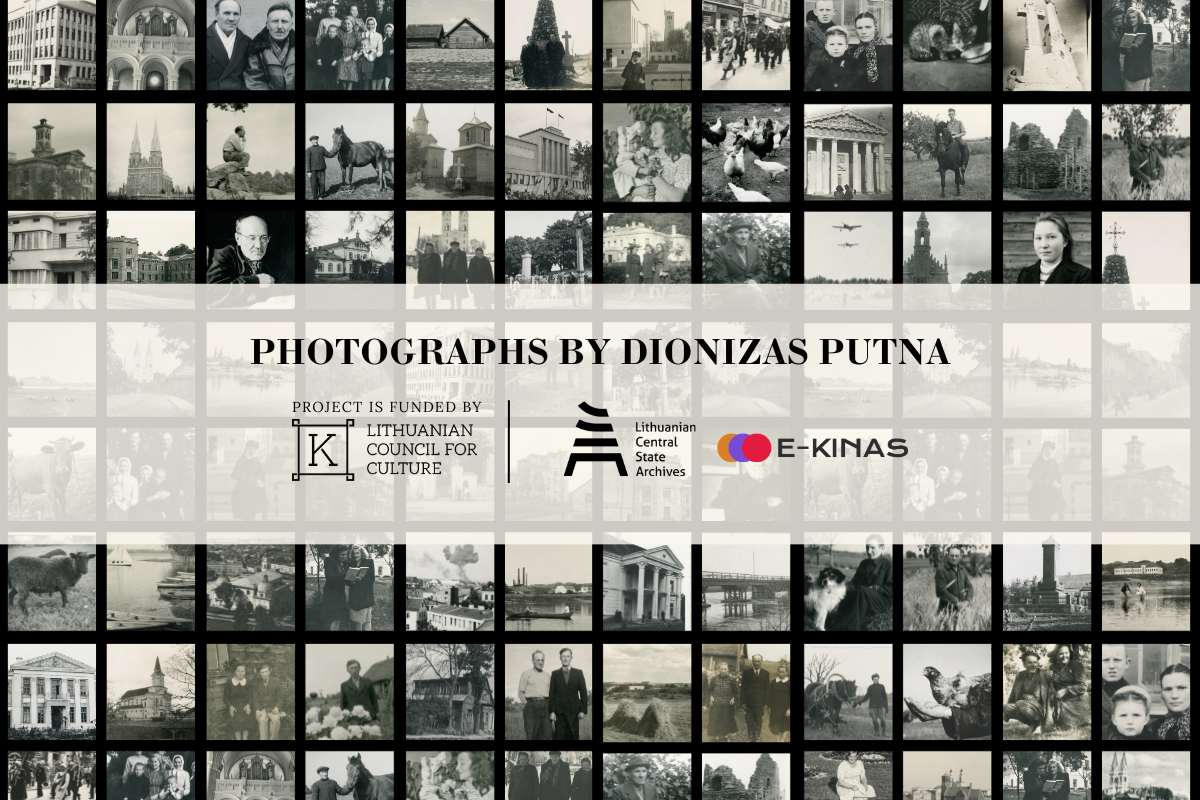
The Lithuanian Central State Archives has completed the second part of the project “Purchase of the Photographic Collection of Alanta Photographer Dionizas Putna (1892–1964) and the Album of Priest Juozapas Matelionis (1895–1964)”. As part of the project, the Archives is presenting to the public the photographic legacy of Dionizas Putna, which is of exceptional historical and artistic value. The project is funded by the Lithuanian Council for Culture.
We are pleased to share the news that, less than six months after the project began, the Archives is presenting the photographic collection of Alanta photographer Dionizas Putna (1892–1964). The collection consists of almost one thousand photographic prints and negatives. For more than sixty years, these photographs were collected and preserved first by private individuals and later by a dedicated collector. Today, they have become part of the National Documentary Heritage Fund and are freely accessible to everyone online.
Photographer Dionizas Putna, who lived in the village of Viteliškiai (Molėtai District), photographed not only the nearby town of Alanta, but also other cities, towns and villages across Lithuania, including Vilnius, Kaunas, Biržai, Prienai, Salakas, Pabiržė, Staiginė, Skiemonys, Giedraičiai, Musninkai, Kuktiškės and others. His photographs capture interesting and rarely documented moments from the history of interwar Lithuania. These include the bridge over the Nemunas River in Prienai damaged by the spring ice drift of 1937; an Aviation Day celebration held in Kaunas in 1939; and the preparations to welcome the return of the Vilnius Region to Lithuania in 1939, when D. Putna photographed a symbolic gateway built to welcome soldiers marching into Vilnius.
The collection also contains historically rare and important photographs from the Second World War. Photographs taken in Kaunas during the June Uprising in 1941 show a rally near the Vytautas the Great War Museum. Another photograph captures the 1941 fire in Kaunas.
Interestingly, D. Putna's life also spanned another important period in Lithuania's history – the Soviet era. His photographs show Soviet auxiliary police units, the Three Crosses Monument in Vilnius covered with Russian-language graffiti, the cross in Skiemonys after it had been torn down, and other scenes.
One of the most interesting parts of D. Putna's collection consists of more than two hundred photographs of ordinary local people – portraits of the residents of Alanta. Their faces are unretouched, often showing signs of hardship and appearing older than their age. Some of the portraits were taken in D. Putna's homemade outdoor photo studio in Viteliškiai, where a white or black cloth was attached to the wall of his house to serve as a backdrop. These photographs not only allow us to get to know the people who lived in the Alanta area at the time, but also offer a closer look at the photographer's working methods.
The preservation, description and digitization of D. Putna's photographs is not simply technical archival work. Every photograph that is described and digitized helps preserve a specific detail of history: a person's face, a moment from family life, a building that no longer exists, a monument, a street that has changed, a landscape, a record of a historical event, and much more.
Some of the processed photographs by D. Putna are already available on the E-Kinas platform. A special photo story has also been prepared in Lithuanian and English, inviting visitors to discover the photographer's work and take a closer look at the people, places and moments of 20th-century life in Lithuania that he captured.